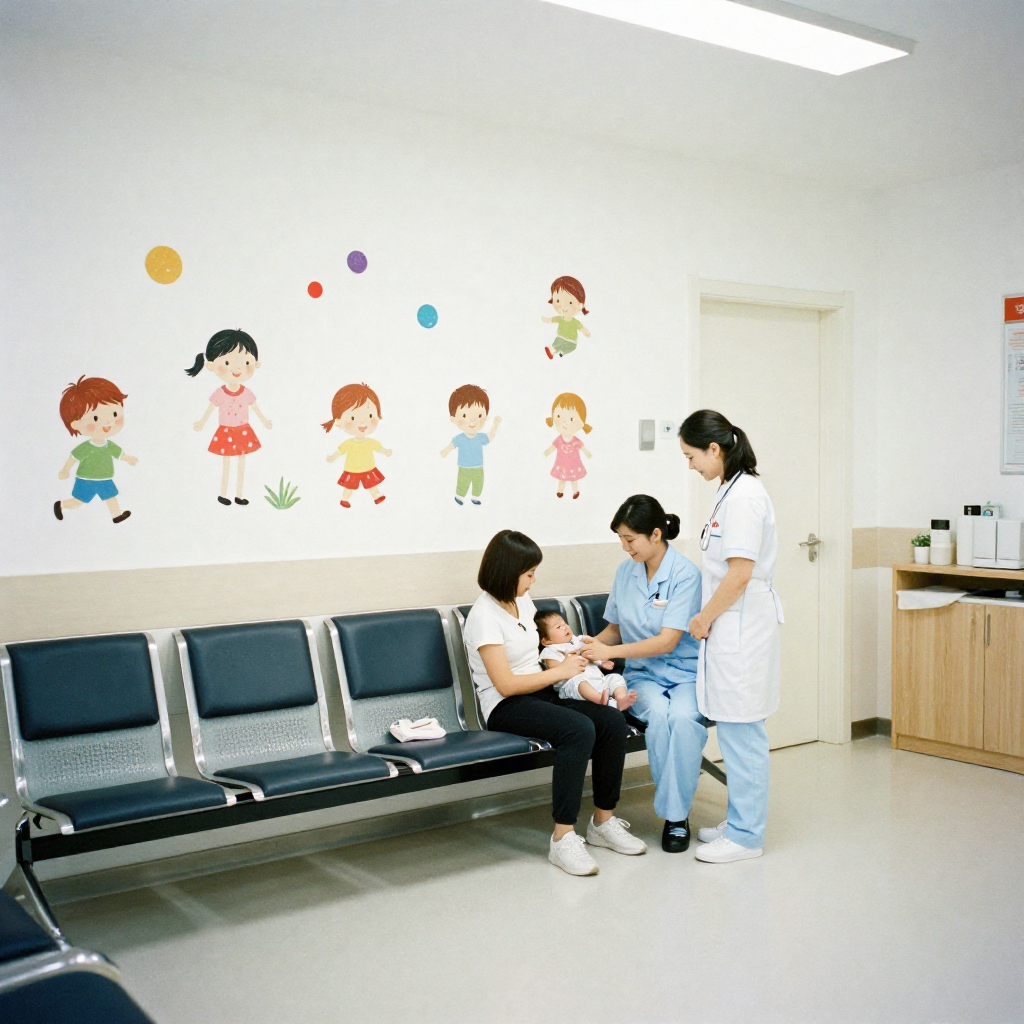
Vaccination Centre in Nashik
Protecting Your Child from Dangerous Germ-Borne Infections
Vaccines can help protect your child from dangerous germ-borne infections.
Vaccines, immunizations, needles, and shots are all terms used to describe vaccinations. Vaccines work by enhancing the immune system's ability to tackle specific pathogens. The immunization trains your child's immune system to recognize and fight specific bacteria, lowering the chances of getting sick when he or she is exposed to them.
Antibodies to fight the germs (each antibody is "trained" to fight a specific germ) and memory cells to remember the germs are produced by your child's immune system in response to the antigens (pieces of germs that have been weakened or killed) in the vaccine.
Vaccination Schedule
Vaccinations are given using injections (needles) into the upper arm or leg of the child. Some children's immunizations require a series of doses (typically 2 to 4 doses) to achieve maximum effectiveness. This is referred to as a "main series."
To refresh the immune system's memory and maintain protection, several vaccines require a "booster" dosage months or years after the first dose(s). If your child misses a vaccine dose, he or she will need "catch-up" doses (also known as "supplemental" doses) to remain protected.
